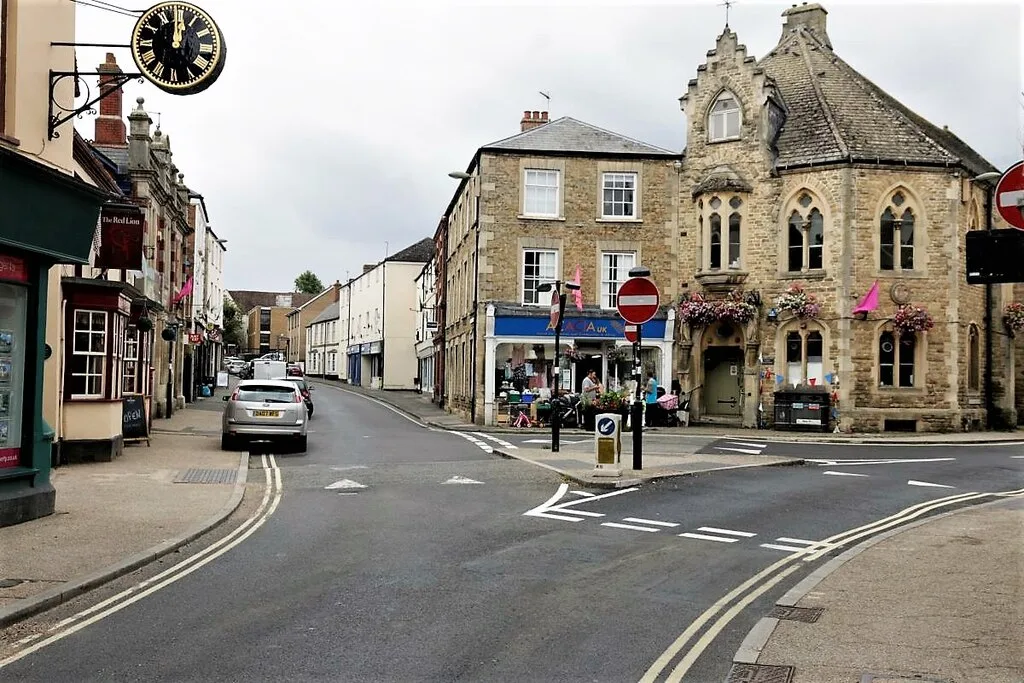

GV Wine on Marlborough Street can sell alcohol from 8am to 10pm after a hearing drew 13 representations and four objectors. What the panel was not allowed to weigh.
A convenience store on Marlborough Street in Faringdon has been granted a licence to sell alcohol from 8am to 10pm every day, an hour later in the morning and shorter overall than the applicant first sought, after four neighbours told a Vale of White Horse District Council panel that the proposed hours were too long for a residential street.
The panel granted the premises licence for GV Wine, 35 Marlborough Street, SN7 7JL at a hearing on 4 August, and the decision notice was signed on 7 August. (Vale of White Horse District Council, Licensing Acts Panel decision notice)
What was applied for, and what was granted
The unit had been empty and reopened recently as a convenience store, with alcohol sales held back until the licence was determined. The application was advertised correctly and drew 13 representations. Four of the people who had written in also spoke at the hearing.
The council’s report contained an error, which the licensing officer corrected at the start of the hearing: it gave the proposed start time as 6am, when the application had always sought 7am. Five conditions had already been agreed between the applicant and the licensing authority during the 28-day statutory consultation period.
Speaking for the applicant, agent Patrick Burke of PMB Licensing said the applicant had run licensed convenience stores and restaurants for years, that stock would generally be collected from a cash and carry rather than delivered in large commercial loads, and that CCTV, a Challenge 25 policy, staff training and age-verification procedures would promote the licensing objectives. The applicant, Vidpreet Singh, told the panel he had been in the licensed trade since 2023 and, as designated premises supervisor, expected to spend most of his time at the shop, particularly at first.
In closing, having heard the objections, the applicant offered to cut both the opening hours and the alcohol sales hours to 8am to 10pm daily. That is what the panel granted, for both the supply of alcohol and the shop’s opening hours.
What the panel could not take into account
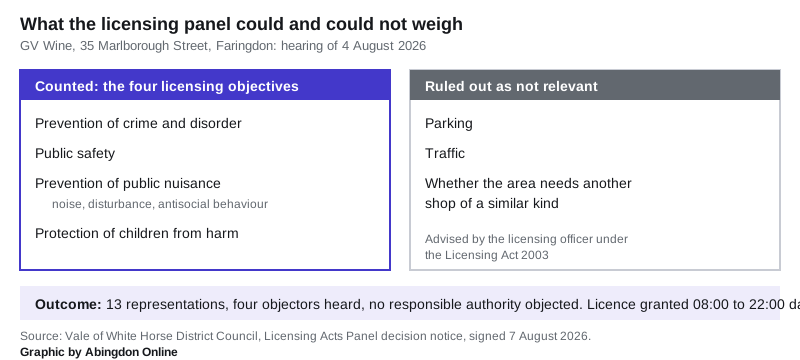
This is the part of licensing law that surprises people who take the trouble to write in. Representations can only be considered where they relate to one of the four licensing objectives: the prevention of crime and disorder, public safety, the prevention of public nuisance, and the protection of children from harm.
The representations here raised noise and antisocial behaviour, street drinking, crime and disorder, and the protection of children, all of which the panel could weigh. They also raised parking, litter and traffic. The licensing officer advised that parking, traffic and the availability of similar businesses in the area were not relevant considerations under the Licensing Act 2003 and could not be taken into account.
The objectors who spoke said they lived close to the premises, one immediately next door, and that previous businesses in the unit had traded during normal daytime hours. Their concerns centred on noise, disturbance, antisocial behaviour and nuisance, and on the length of the proposed hours in a residential location. One asked that, if the licence were granted, the hours for selling alcohol be reduced. That request was effectively met.
Why the panel said yes
The decision notice sets out the reasoning plainly. The panel found there was insufficient evidence to justify refusing the licence or imposing conditions beyond those the applicant had offered. It attached significant weight to the fact that no responsible authority objected: Thames Valley Police, environmental health and children’s services were all consulted and none made a representation.
The panel also accepted that the applicant was an experienced operator, that the operating schedule contained appropriate measures, and that 8am to 10pm was “an appropriate and proportionate response to residents’ concerns regarding noise, disturbance and public nuisance”. It said it welcomed the applicant’s willingness to engage with local residents and to reduce the hours during the hearing itself.
The five conditions attached to the licence are more demanding than a casual reader might expect. They require digital CCTV covering every licensed area including entrances, exits and outside space, recording whenever the shop is open, with footage kept for at least 31 days and the previous two days’ recordings handed to the police or the council immediately on request. An incident register must be kept for at least six months and signed off weekly. A refusals register must record every declined sale of an age-restricted product, with the time, date, staff member and reason. Challenge 25 must operate, with only a photo driving licence, passport, national identity card or PASS-hologram card accepted as proof of age. All staff selling alcohol, paid or unpaid, must be trained in the law on alcohol sales, proxy purchases and refusals, with refresher training every six months and records kept for a year.
What it means for you
If you objected and are unhappy with the outcome, any party to the hearing may appeal to the magistrates’ court within 21 days of the date of the decision notice. The notice was signed on 7 August, so that window closes at the end of 28 August. An appeal has to be made in the correct manner and with the fee, and the panel’s decision stands until the court rules.
If problems arise later, the licence is not permanent permission to behave however the shop likes. Any person may ask the council to review a premises licence if it is being run in a way that fails to promote the licensing objectives. Under section 52 of the Licensing Act 2003, a review can modify the conditions, exclude a licensable activity, remove the designated premises supervisor, suspend the licence for up to three months or revoke it. The evidence bar is the same on a review as it was here: what you can show, against one of the four objectives.
If you are thinking of writing in on a future application, the practical lesson from this hearing is that the winning argument was about hours, not about whether the town needs another shop selling alcohol. The hours point was inside the licensing objectives, was raised by people who live nearby, and moved the applicant during the hearing. The “do we need another one” point was ruled out before the panel could weigh it.
Faringdon’s pubs, shops and takeaways are listed on our Faringdon business directory, and licensing decisions for the district are published alongside committee papers on the council’s democratic services site.
Have your say