
The Vale must plan for 14,490 homes by 2041, and written statements on the joint local plan close at noon on 24 August. Plus Dalton Barracks and the land supply.
The plan that decides where houses go in Abingdon, Wantage and Faringdon was declared legally dead ten months ago and is now back in front of its inspectors. There is an open deadline on it this month. Here is the state of play, from the councils’ own documents.
The quick answer
The South Oxfordshire and Vale of White Horse Joint Local Plan 2041 sets the Vale a housing requirement of 14,490 homes between 1 April 2021 and 31 March 2041. That is Policy HOU1 of the submitted plan, and it is front-loaded: 816 homes a year to 2030/31, then 633 a year to 2040/41.
The plan was submitted for examination on 9 December 2024. It is not adopted. Stage 2 hearings were held at Abbey House in Abingdon from 7 to 9 July 2026, and the inspectors have opened a written consultation on nine late documents that closes at noon on Monday 24 August 2026, with a possible further hearing on Wednesday 9 September.
Why 14,490 and not 12,660
The government’s standard method put the Vale’s housing need at 633 homes a year, which over the twenty-year plan period comes to 12,660 homes. The plan asks for 14,490. The difference of 1,830 homes is Oxford’s unmet need, and it is exactly the 183-a-year gap between the 816 and 633 figures, carried for the first ten years of the plan.
That single number is the reason this plan nearly died.
The duty to cooperate: dead, then revived
On 1 October 2025 the inspectors published a post-hearings letter with an unusually blunt finding. On Oxford’s potential unmet need beyond 2031, they wrote, “for the period between January 2024 and November 2024 meaningful engagement on this issue did not occur outside of the formal examination process. Consequently, the DtC in Section 33A of the 2004 Act has not been met. This cannot be remedied during the examination of the plan.”
They gave South and Vale two options: withdraw the plan, or ask for a report saying the same thing. Normally that ends a local plan. Oxford City’s own plan had failed the same test in September 2024 and was withdrawn on 27 January 2025.
What saved it was national policy. A ministerial letter of 9 October 2025 signalled that the duty to cooperate would be removed, and the councils wrote to the inspectors again in light of it. At a procedural meeting held in public on 12 February 2026, the inspectors set out what would have to be revisited before the examination could move on: the local development scheme, the housing requirement, additional sustainability appraisal work, the habitats assessment, and a fresh assessment of cooperation against the replacement national test, “maintaining effective cooperation”.
Those four matters are exactly what the Stage 2 hearings of 7 to 9 July 2026 covered: Matter 1 legal and procedural, Matter 2 maintaining effective cooperation, Matter 3 the housing target, and Matter 5 vision, objectives and spatial strategy.
What is open now, and how to comment
The councils filed nine documents shortly before, during or after the July hearings, including a statement of common ground with Oxford City Council, a note on revised employment and housing scenarios, and a note on local government reorganisation. Because they landed so late, the inspectors are accepting written representations on them.
- What: a single written statement, no more than 3,000 words, covering any or all of the nine documents and nothing else.
- Deadline: noon on Monday 24 August 2026 for electronic copies, and 5pm on Friday 28 August 2026 for two hard copies.
- Where: to the Programme Officer, Ian Kemp, via the examination website.
- After that: if the inspectors think the responses need discussing, a focused hearing starts at 9.30am on Wednesday 9 September 2026 at the Bee House, 140 Eastern Avenue, Park Drive, Milton, Abingdon OX14 4SB.
Statements received after those deadlines will not be accepted. The inspectors are Dr Rachael Bust, G J Fort and Caroline Mulloy.
Dalton Barracks: the 2,750-home garden village on Abingdon’s edge
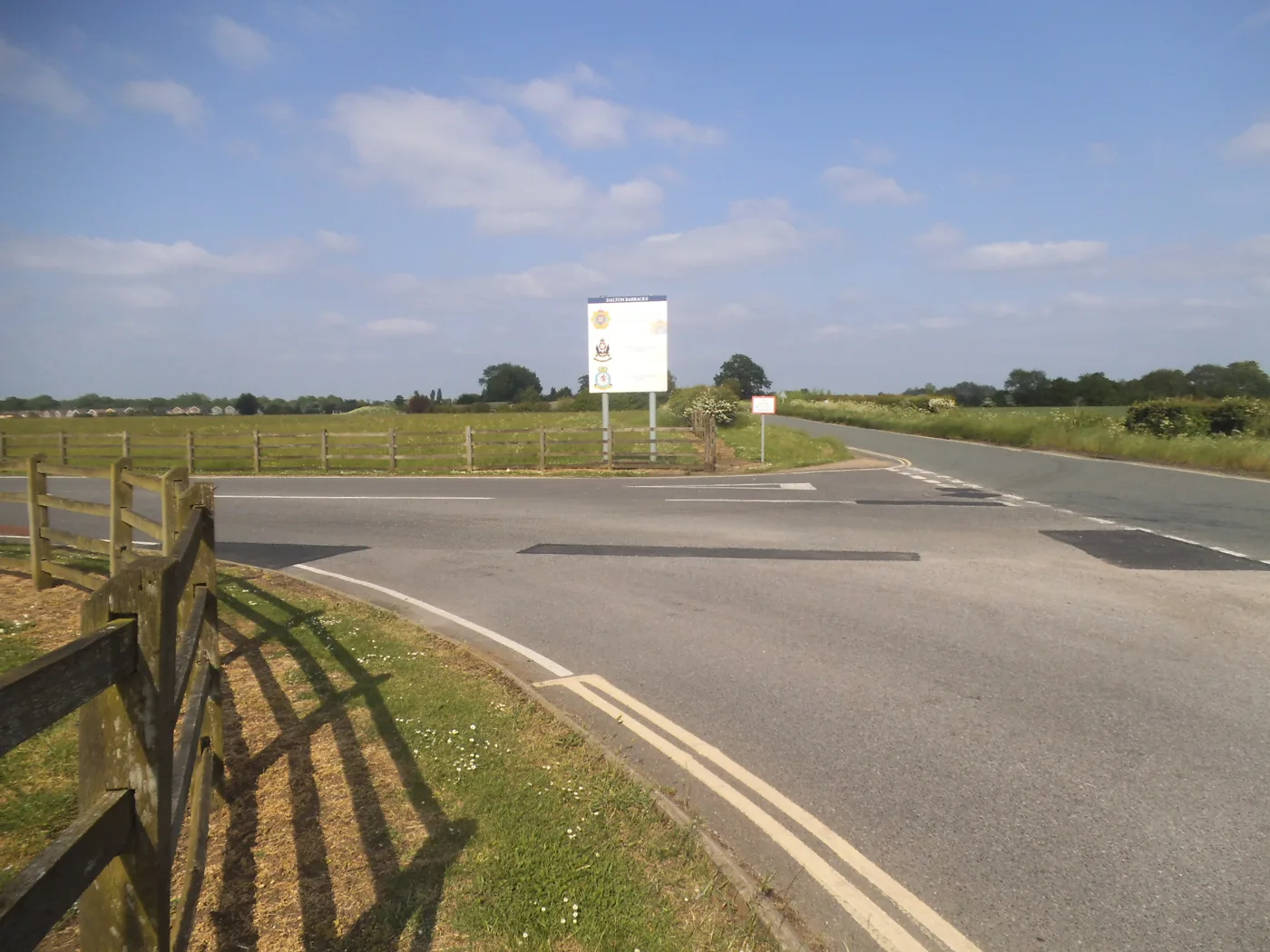
The biggest allocation near the town is Land at Dalton Barracks Garden Village, Shippon, Policy AS10, about two and a half miles north-west of Abingdon town centre.
- It is currently a Ministry of Defence site, and the MoD’s active use of it ceases from 2029.
- Part of it was already allocated for 1,200 homes in Part 2 of the Vale of White Horse Local Plan 2031. The allocation has been expanded to take in the previously developed parts of Dalton Barracks and Edward Brooks Barracks, which were inset from the Green Belt in 2019.
- The site now has capacity for 2,750 homes, of which the councils expect around 912 to be built by 2041. The rest comes after the plan period.
- Part of the allocation stays in the Green Belt and is to be brought forward as parkland.
- It was awarded garden village status in June 2019, and the Vale adopted a supplementary planning document for it in 2022.
- The site includes Abingdon Airfield. Conditions in the policy cover water quality at Cothill Fen SAC, Barrow Farm Fen SSSI and Gozzards Ford Fen, a 10-metre wildlife buffer along the Sandford Brook, and defensive planting between Dry Sandford Pit SSSI and the new parkland.
Whether 2,750 homes on the town’s edge move the market is a separate question, and the current position is on our Abingdon house prices page: the district is up 3.6% on the year while the town’s rolling-year average is down 4%.
The other scheme that changes travel around Abingdon is at Culham, where the plan supports the Clifton Hampden Bypass, the Didcot to Culham River Crossing and, specifically for this town, a walking and cycling bridge between Culham and Abingdon to the west of the railway line, as set out in the Abingdon Local Cycling and Walking Infrastructure Plan. Culham is also one of the three stations Abingdon commuters use, so a walkable crossing would change the town’s access to the rail network as much as its access to the campus.
Can the council refuse applications? The five-year supply
Until the joint plan is adopted, the Vale is judged against its existing plan, and the test that matters for appeals is whether it can show five years of deliverable housing land.
It can, but the margin has narrowed. The council’s statement of December 2025, with a base date of 1 April 2025, records a 5.51-year supply. The previous statement of January 2025 gave 5.81 years. A district that falls below five years loses much of its ability to refuse housing on policy grounds, so the half-year of headroom is the practical difference between the council setting the agenda and developers setting it.
The council might not exist much longer
Running underneath all of this is local government reorganisation. The government wants Oxfordshire’s two-tier system of a county council plus districts replaced by unitary authorities, and three proposals went in:
- One council for the whole county, Oxfordshire Council.
- Two councils: Oxford and Shires Council from Cherwell, Oxford City and West Oxfordshire; and Ridgeway Council from South Oxfordshire, Vale of White Horse and West Berkshire.
- Three councils: Greater Oxford, Northern Oxfordshire and Ridgeway.
Under either the two- or three-council option, Vale of White Horse would merge into Ridgeway Council with South Oxfordshire and West Berkshire. Statutory consultation ran from February to March 2026, and on 16 July 2026 the government chose the three-council model, with a start date of 1 April 2028. That decision is now on hold: on 7 September 2026 the local government minister ordered a review of the whole reorganisation programme and told councils to stop implementing the July decisions (our report). The inspectors have a note on it in front of them (LPA94), which is why it is on this page rather than a separate one.
Checking a planning application in the Vale
Two practical notes.
The Vale does not use the Idox public access system that most councils run. Its
planning register is a separate application shared with South Oxfordshire, at
data.whitehorsedc.gov.uk.
If a link from elsewhere sends you to an /online-applications address on that
domain, it will not work; there is no Idox instance there.
Separately, the council’s Land Charges system relaunched on Monday 13 July 2026 after a major upgrade, which matters if you are buying and waiting on a search.
Frequently asked questions
How many new homes is Abingdon getting?
The submitted joint local plan sets the whole Vale of White Horse district a requirement of 14,490 homes between 2021 and 2041, not Abingdon alone. The largest allocation near the town is Dalton Barracks Garden Village at Shippon, with capacity for 2,750 homes, of which about 912 are expected by 2041.
Has the Vale of White Horse local plan been adopted?
No. It was submitted on 9 December 2024 and is still in examination. Stage 2 hearings ran from 7 to 9 July 2026 and a written consultation on late documents closes at noon on 24 August 2026.
Why did the inspectors say the plan failed the duty to cooperate?
Because meaningful engagement with Oxford City on its potential unmet housing need beyond 2031 did not happen outside the examination between January and November 2024. The inspectors said in their letter of 1 October 2025 that this “cannot be remedied during the examination of the plan”. The examination resumed only because the government moved to remove the duty to cooperate.
Does the Vale of White Horse have a five-year housing land supply?
Yes, 5.51 years as at 1 April 2025, per the council’s December 2025 statement, down from 5.81 years a year earlier.
What is happening at Dalton Barracks?
The Ministry of Defence site at Shippon, north-west of Abingdon, is allocated as a garden village of up to 2,750 homes. MoD use ceases from 2029, part of the site stays in the Green Belt as parkland, and the councils expect around 912 homes to be built by 2041.
Will Vale of White Horse District Council be abolished?
Possibly. Under two of the three local government reorganisation proposals for Oxfordshire, the Vale would merge with South Oxfordshire and West Berkshire to become Ridgeway Council; under the third it would be absorbed into a single Oxfordshire Council. The government had not announced its decision when this page was written.
Sources
- Joint Local Plan 2041 (Publication Version) for Policy HOU1, the standard-method figures, and the Dalton Barracks and Culham allocations.
- Joint Local Plan 2041 Examination for the examination timeline and document dates.
- ID10, Inspectors’ post-hearings letter, published 1 October 2025, for the duty to cooperate finding.
- ID15, post-procedural meeting letter, 19 February 2026 for what had to be revisited before the examination could continue.
- ID25, Inspectors’ note on post-hearings consultation, 29 July 2026 for the 24 August deadline and the 9 September focused hearing.
- Vale of White Horse Joint Local Plan Examination Hearings notice for the Stage 2 hearing dates and venue.
- Vale of White Horse five-year housing land supply statement, December 2025 for the 5.51-year figure.
- Vale of White Horse: local government reorganisation for the three unitary proposals.
- Land Charges system relaunch, 10 July 2026.
Examination dates and deadlines move. Confirm anything time-sensitive against the examination website before acting on it. Checked August 2026.
Have your say